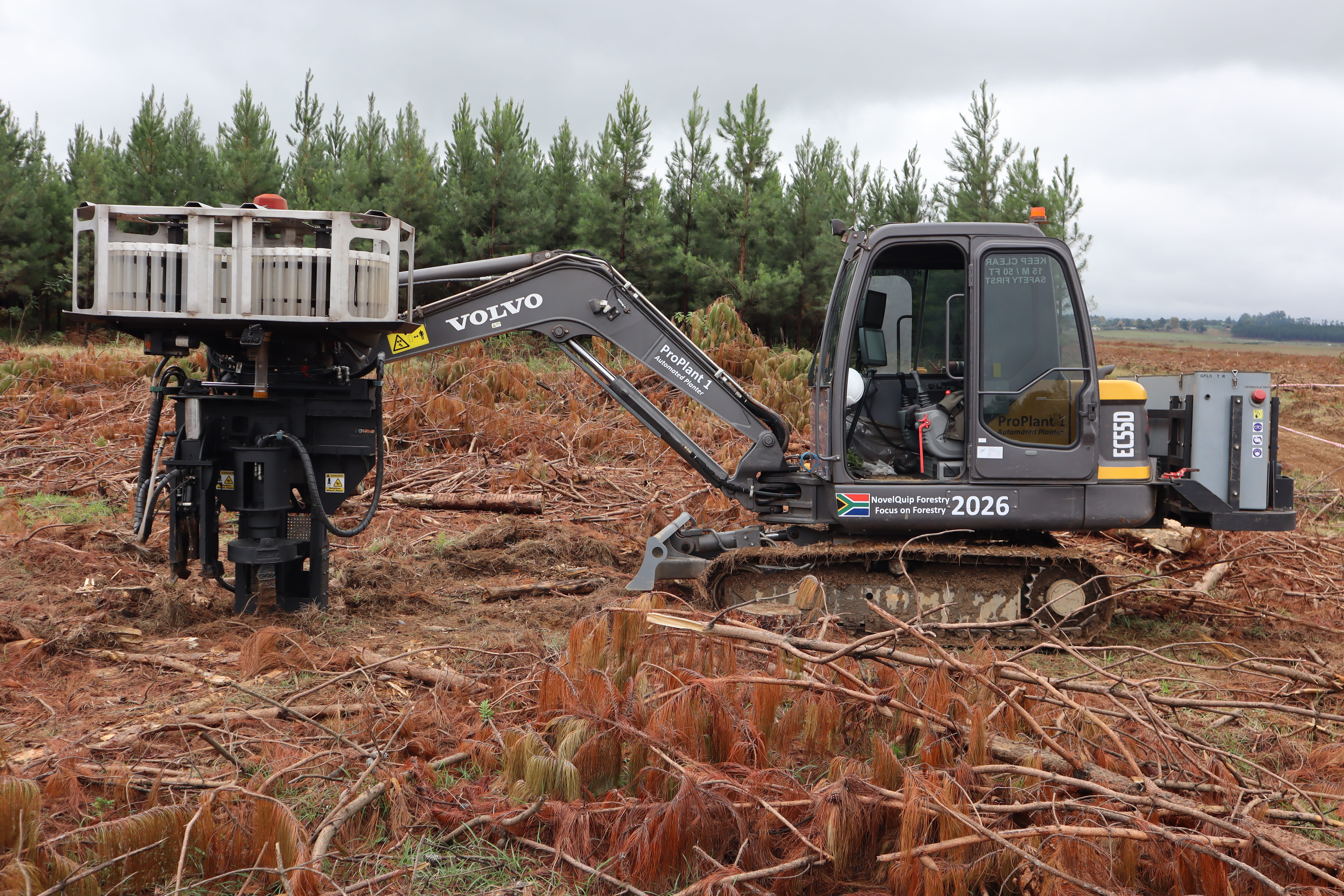


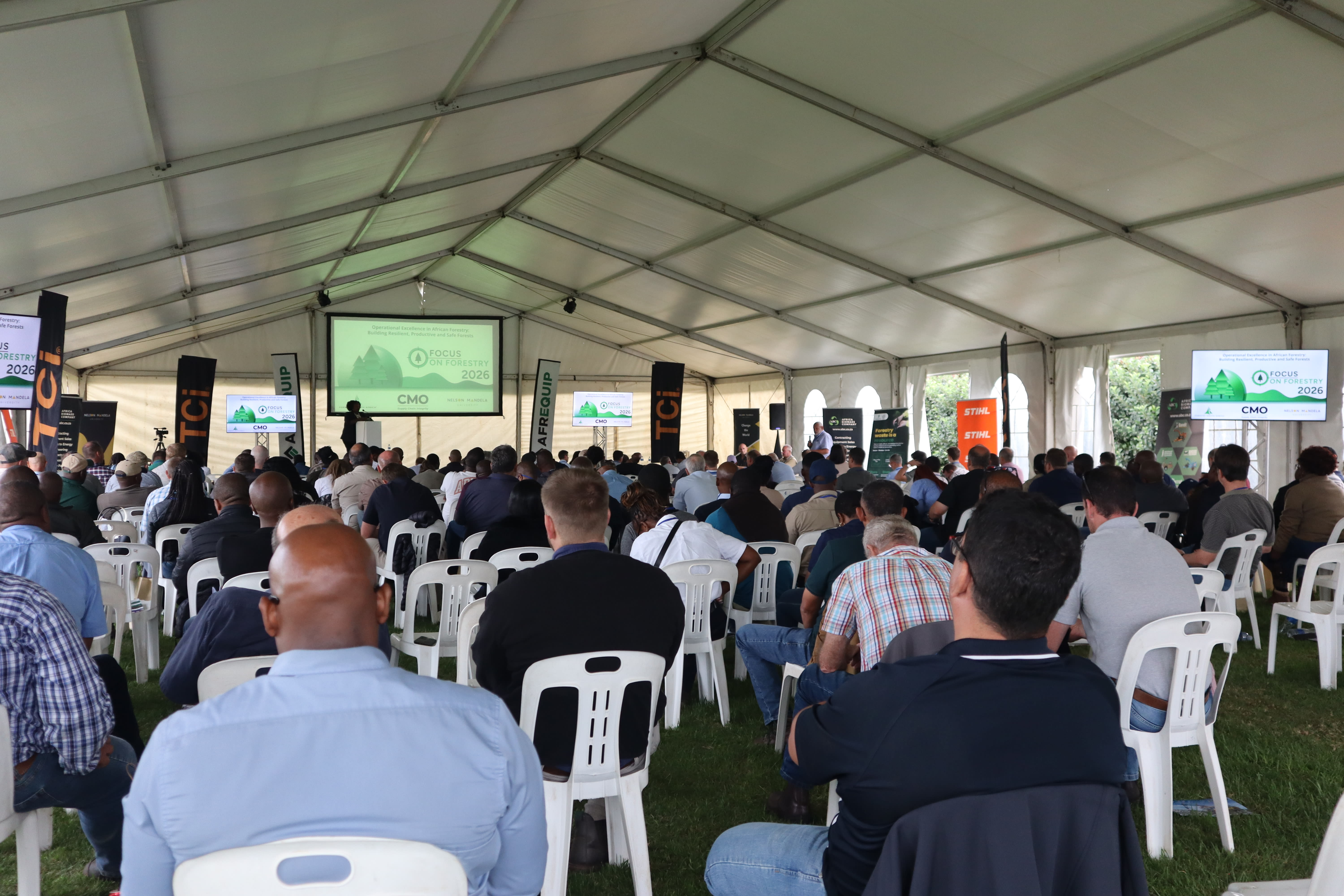
CMO, Nelson Mandela University, and Forestry South Africa (FSA) hosted the Focus on Forestry conference at the Karkloof Country Club in Howick which is in the Kwa-Zulu Natal Midlands, South Africa. The conference spanned three days from 21 – 23 April 2026 under the theme “Operational Excellence in African Forestry: Building Resilient, Productive and Safe Forests”. The conference provided a platform for local and international experts, researchers, foresters, managers, students, and manufacturers to share knowledge through presentations and discussions on current developments in forest management, silviculture, and forest engineering operations on day 1 and day 2. On the last day, machine and equipment manufacturers showcased their latest technology designs through live demonstrations. A summary of modern silviculture technology-related presentations is presented below.
Nursery planning and execution
Mr Heinz Reinstorf presented on “Design and Commissioning of Nurseries in Remote Forestry Areas”. He began by highlighting BCC’s purpose: designing customised technological solutions to grow all crop types. Then, he described the key components of designing and building a sustainable nursery using the Turnkey project. This involves several phases, including planning (e.g., budget, layout), site selection (e.g., water supply and quality), site mobilisation (e.g., site survey), logistics (e.g., handling of materials), and infrastructure (e.g., roads and drainage, level of mechanisation).
Silviculture modernisation trends
Dr Muedanyi Ramantswana from Nelson Mandela University presented results from silviculture technology adoption surveys conducted in 2018 and 2025. In both surveys, findings revealed that manual methods remain the dominant practice throughout the re-establishment phase (e.g., manual pitting with a road pick/mattock). The 2025 survey revealed a steady increase in the adoption of mechanised solutions, such as mulching (from 8% in 2018 to 12% in 2025) and pitting machines (from 16% in 2018 to 27% in 2025). He also highlighted the noticeable adoption of aerial technologies (e.g., UAVs/drones) for preplant weeding, which was nonexistent in 2018. He then compared the overall South African modernisation results with those from Brazil and Sweden, showing that site preparation is predominantly manual in South Africa but mechanised in the other countries. Manual planting is the dominant practice across all countries, although semi-mechanised (SA and Brazil) and mechanised (Brazil and Sweden) options are also being used. He indicated that, to integrate advanced technologies, the environment and context matter.
Planting technology development
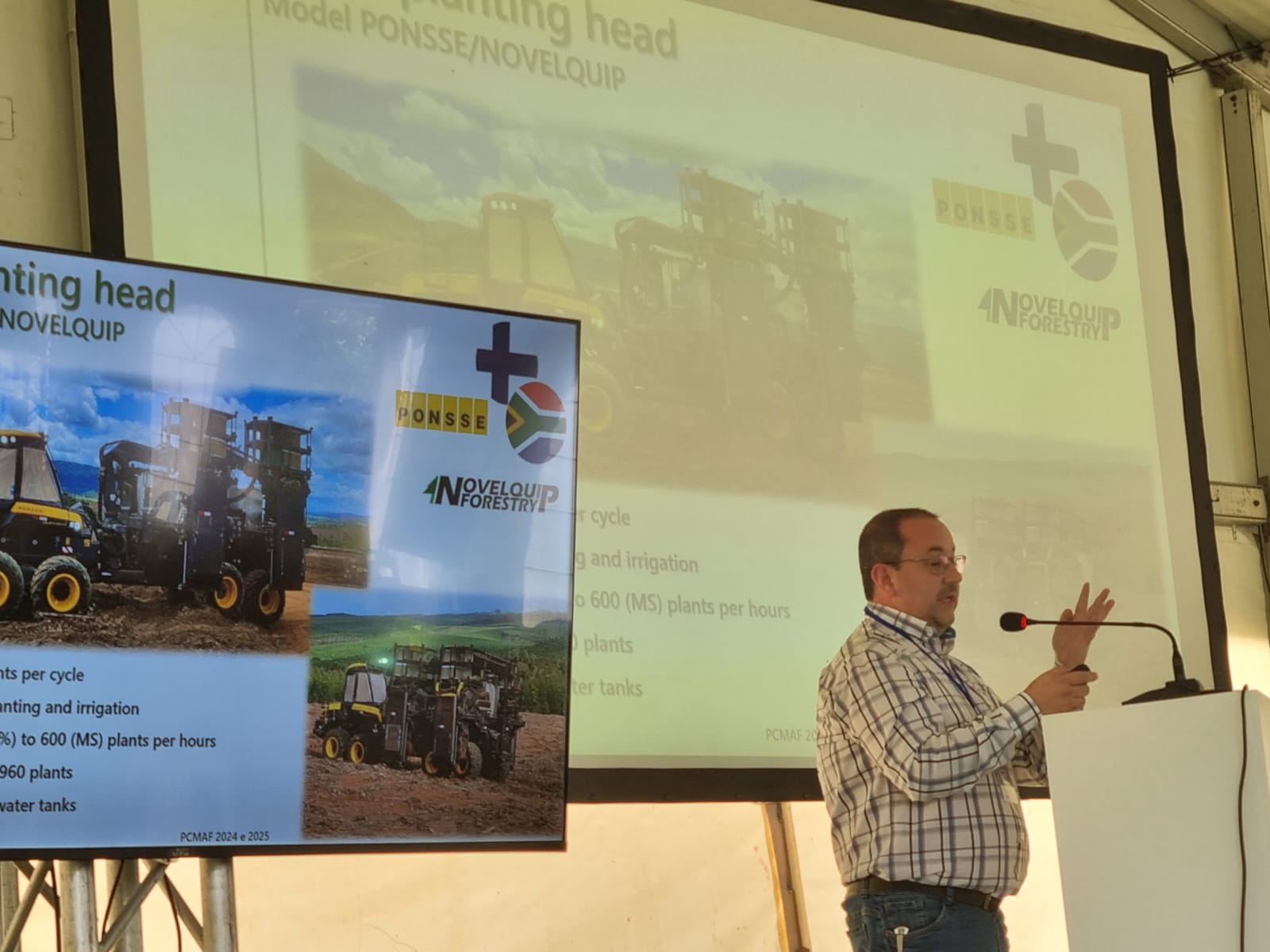
Prof Saulo Guerra from UNESP presented on “Technological evolution of forest mechanisation”. He gave an overview of the development and testing of mechanised planting machines in Brazil, beginning with the Bracke P11.a. He then presented some of the new planting solutions, which are single-headed (e.g., Risutec SKB 240), dual-headed (e.g., Bracke P22.b, Plantmax X2), triple-headed (Komatsu D61EM) and quad-headed (Ponsse/Novelquip) planting machines. Thereafter, he outlined efforts to mechanise irrigation through automated tractor-based systems.
Appropriated technology selection for wheeled firefighting vehicles
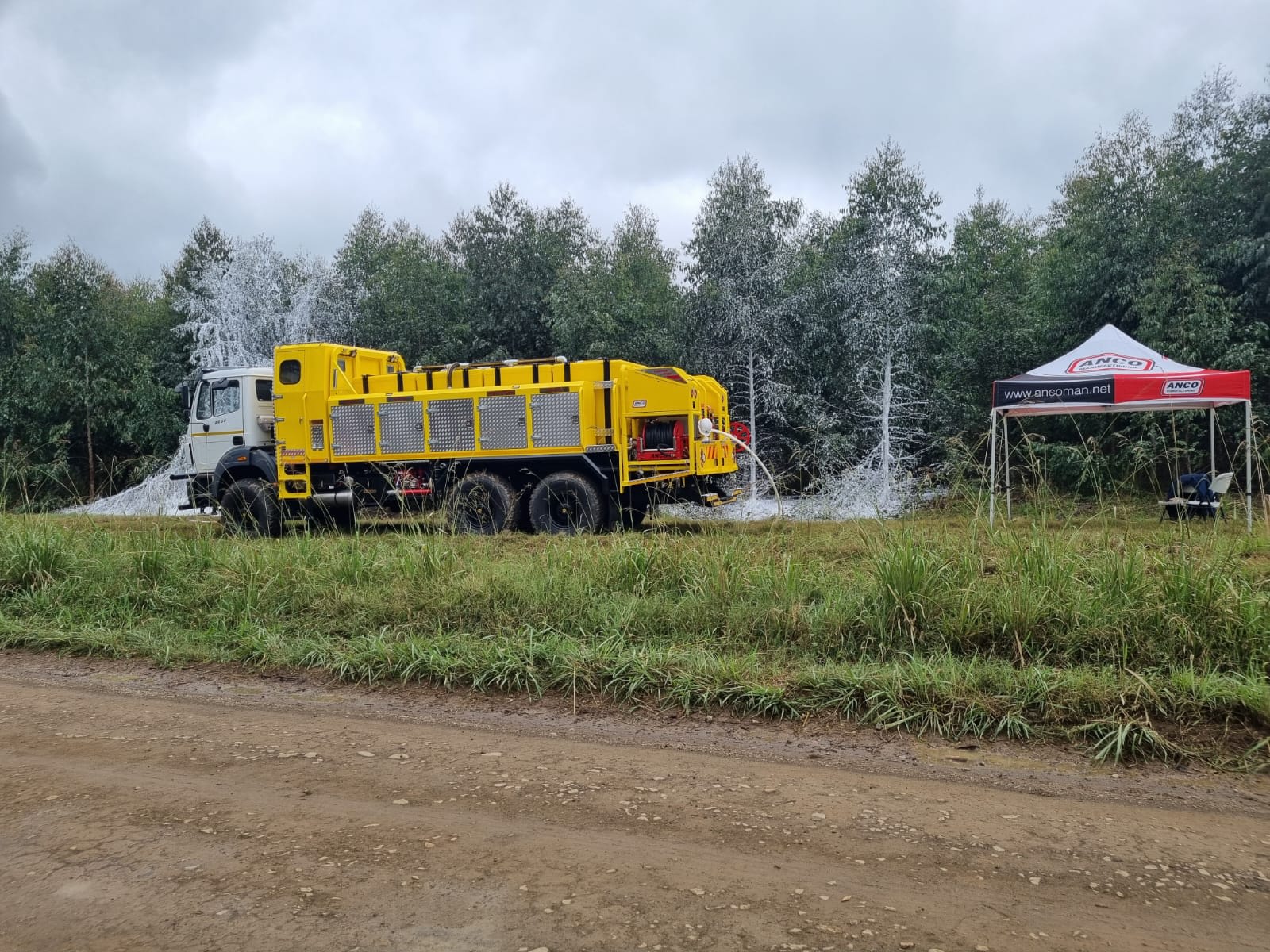
Mr Andre Scheepers from ANCO presented on “Fire Equipment Selection for Site-Specific Fires”. He started by outlining key factors to consider when selecting firefighting equipment. He emphasised the importance of matching the vehicle design and unit to the topography and road conditions. Thereafter, he highlighted the advantages and drawbacks of purchasing small, medium and large fire tenders. He then discussed strategies to improve fleet efficiency by optimising pump performance and compressed air foam systems (CAFS).
Planting machine research results
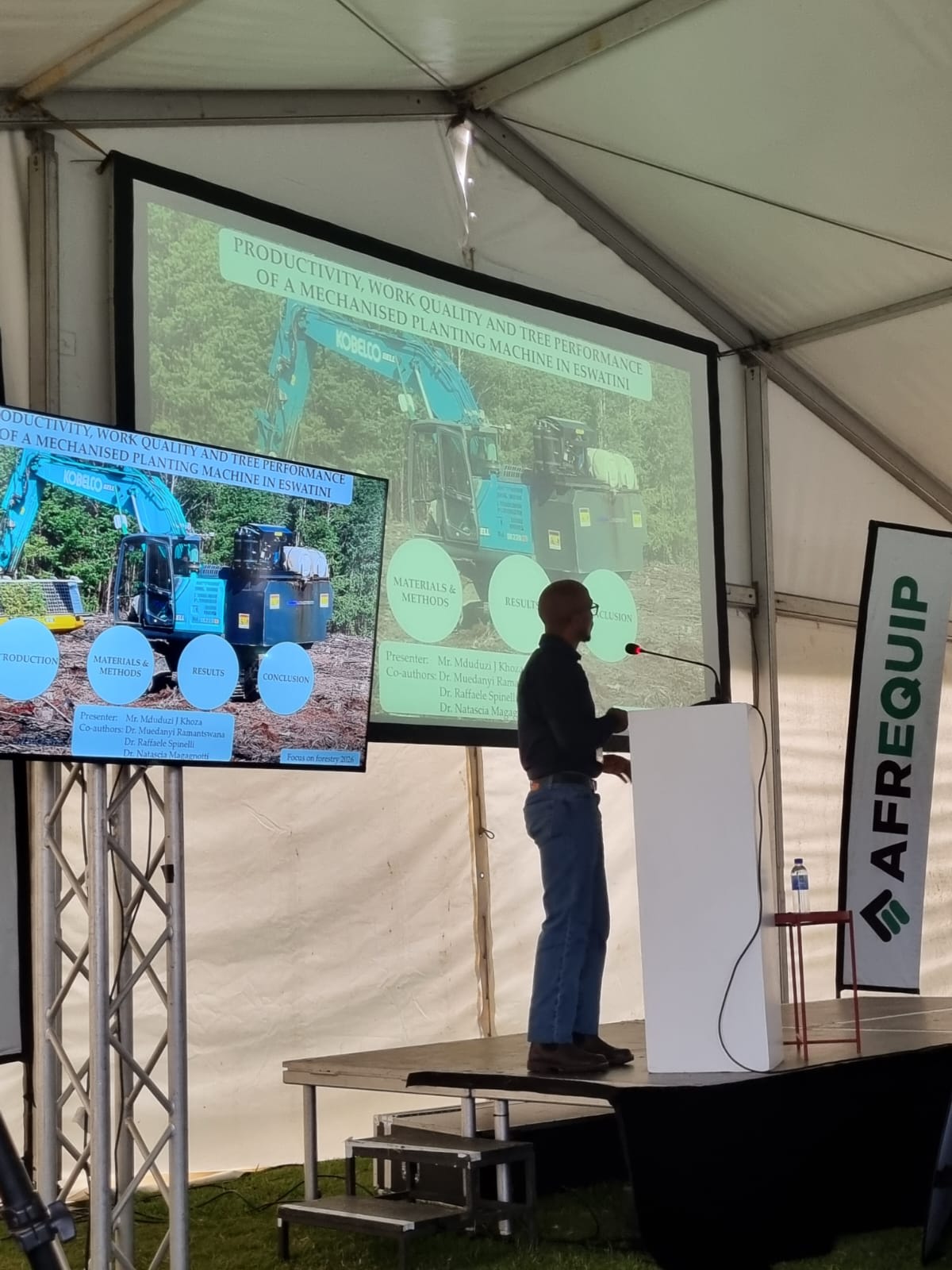
Mr Mduduzi Khoza from Nelson Mandela University presented research results on the productivity, work quality, and tree performance of a mechanised planting machine in Eswatini. The research revealed that the excavator-based Risutec ASP360 produced 165 plants/PMH, with a planting quality of 48%. He indicated that the machine struggled in areas with high levels of residue, reducing productivity and increasing costs. He then indicated that mechanically planted trees were comparable to those of manual methods in terms of survival and growth Publication link: Productivity, work quality and tree performance of a mechanised planting machine in Eswatini
Application of Artificial Intelligence in Forestry
Mr Michael Brink from Paybilt, Inc., presented a keynote address on “The start of the AI transformation wave”. He first gave case studies of artificial intelligence (AI) use globally and how this technology is applied to enhance efficiency within workspaces. Thereafter, he highlighted that this technology is impacting the forestry industry and can be optimised to perform mundane tasks such as harvest scheduling, route planning and yield prediction. He emphasised that embracing this technology would allow employees to perform tasks only humans can do and to improve relationships within teams and with clients.
Difficult terrain silviculture
Mr Gary Olsen presented on “Extreme Slope Logging - Challenges for Equipment Manufacturers”, outlining some of the technologies Tigercat (TCi) has developed to address extreme slope conditions in mechanised operations. He indicated that forest operations are frequently pushed to steeper areas, where traditional mechanised options struggle to operate, increasing the need for more advanced technologies. This is also true in mechanised silviculture, where advanced machines and winch-assist systems are integrated to improve operator safety and comfort (e.g., winch-assist systems during mechanised residue management in steep areas of New Zealand).
Integration of modern silviculture into the supply chain
Prof Chad Bolding from the University of Georgia gave an overview of “Integrating Forest Operations Technology and Innovation into Wood Supply Chains”. He noted the change in technology adoption in the forest industry over the past 150 years, leading to the adoption of more productive and safer mechanised forestry practices. Then he highlighted the challenges and opportunities in forest innovation. He mentioned that these opportunities involve adopting mechanised planting machines to alleviate labour issues, through collaboration among manufacturers, researchers, grower companies, and contractors.
Conclusion
Silviculture technology integration remains in a developmental phase characterised by the introduction, testing and gradual adoption of new and emerging technologies. This growing trend has prompted several stakeholders to investigate, test and implement various innovations, especially in planting operations. Simultaneously, the integration of artificial intelligence applications presents significant opportunities to enhance value by optimising human resources and social skills, which are critical to business and life success. Furthermore, ongoing technology adoption is pushing the boundaries of conventional silvicultural practices, enabling operations in difficult terrain where harvesting systems are already operating efficiently. Consequently, a holistic value chain approach will be essential moving forward to optimise forestry operations across all stages of the production chain. For access to the conference presentations, go to Focus on Forestry 2026 Presentations