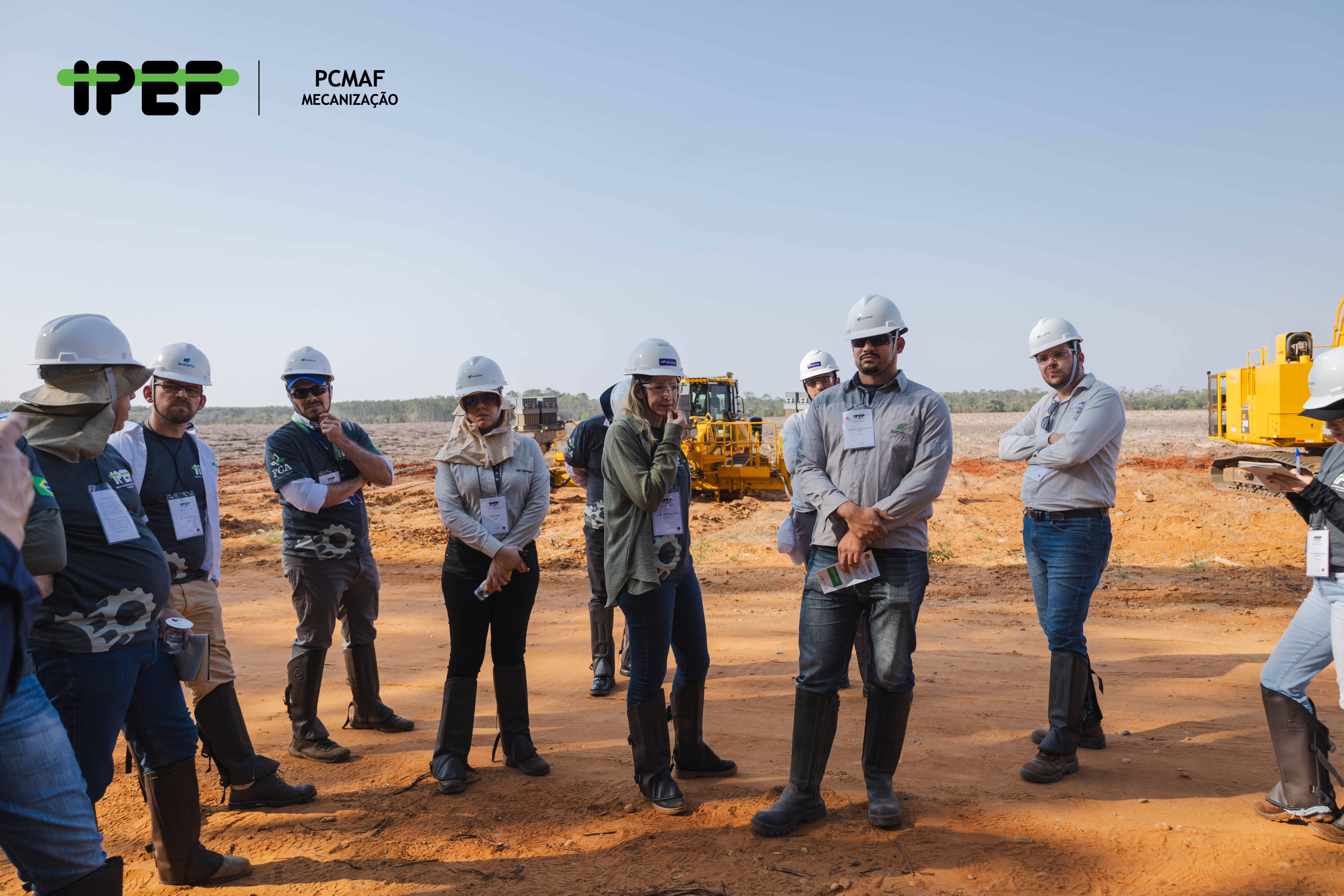


During the first week of September 2024, approximately 150 professionals from our sector gathered at the premises of the company Suzano, Três Lagoas/MS Unit, to celebrate the 10th anniversary of the founding of the Cooperative Program on Forestry Mechanization and Automation (PCMAF), which belongs to the Institute of Forestry Research and Studies (IPEF). PCMAF, a national reference in forestry mechanization, has proposed and coordinated actions, technical assessments, projects, and field studies, culminating in several technological innovations and solutions today in forest plantations throughout the national territory. These technologies are developed with the cooperation of a group of forestry companies affiliated with PCMAF and associated with IPEF. During this process, the development and introduction of various models and configurations of mechanized eucalyptus and pine seedling planters installed on hydraulic excavators, bulldozers, or forwarders stand out. In addition to this equipment, automatic irrigators were improved for post-planting seedlings, the subsoiler for hydraulic excavators, drone benchmarking, and a rubber track tractor for applying herbicides in the total area or the protected area, among several other forestry attachments.
In PCMAF's work, more than 24 pieces of forestry equipment were also evaluated. In addition, 21 events and field days were organized, and program managers and researchers participated in six international events and dozens of technical events, fairs, and national exhibitions. This event, celebrating 10 years of extraordinary activity and innovations in the mechanization of forestry, takes place in this context. On the agenda were presentations and strategic discussions of the actions developed in this first decade and prospects for the coming years in light of the forestry sector's main demands and challenges. At the event, there were also field demonstrations of new technologies for mechanizing and automating silvicultural processes.
In this sense, in this article, our objective is to highlight the potential for future actions to leverage the mechanization of forestry listed by the commemorative event participants, as contextualized below. After the opening of the event, the member of the PCMAF Technical-Administrative Committee and Forestry Operational Development Coordinator at Eldorado Brasil, Cássio Fagundes Gomes, presented the history of the Program's founding and the main projects developed over the years. Afterward, the President of IPEF and Director of Forestry Operations at Suzano S.A., Douglas Seibert Lazaretti, spoke on the topic "PCMAF and the Sector – a look at the challenges and opportunities," highlighting the role of this Program as an accelerator of the mechanization of the sector in the face of the main challenge: lack of labor.
Continuing the theme, Prof. Dr. Saulo Guerra presented the survey results of the main demands of companies affiliated with PCMAF, aiming to encourage discussions about the program's future. To close the moment of lectures, João Comério, CEO and Chairman of the Board at the Innovatech Group, addressed the "Economics of the Planted Forest Sector," corroborating that the lack of labor is one of the main current challenges, especially in the state of MS. These discussions were attended by employees and directors of forestry companies, representatives of academia, employees of forestry equipment manufacturers, technology suppliers, and representatives of other institutions in the forestry sector, such as Ibá (Brazilian Tree Industry). Throughout the presentations and debates with participants, the relevance of uniting the industry in favor of an agenda of forestry mechanization in different sectors of the production chain becomes clear.
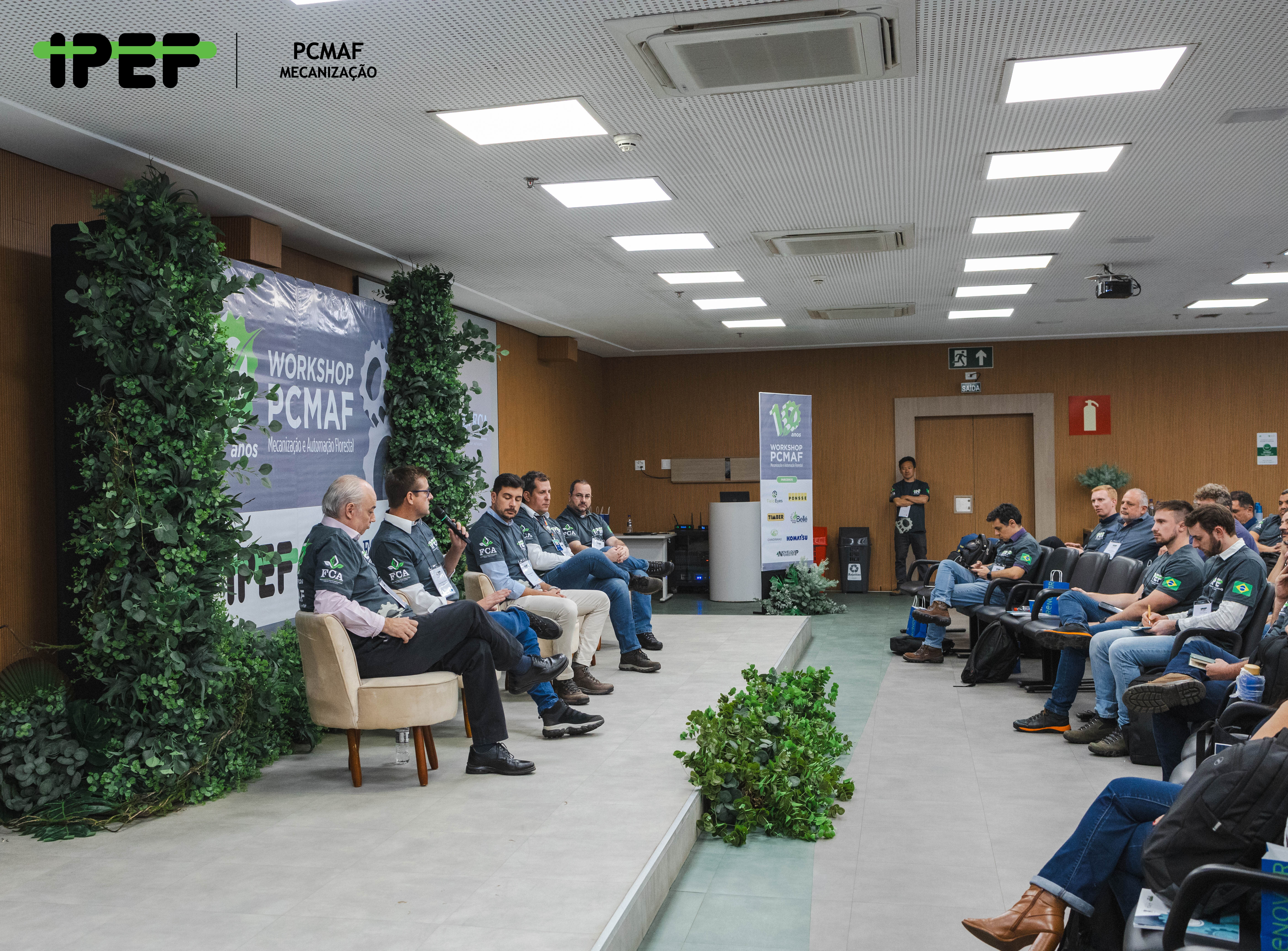
Another topic under debate was the role of a cooperative program such as PCMAF, acting as a catalytic agent for introducing disruptive and incremental technologies in the mechanization of forestry. The discussions made it clear that PCMAF has been the main centralizing link for forestry companies in this approach in the last decade, and, as such, it should be the focal point for defining priorities and main demands to promote interaction between machine manufacturers and implements and technology companies. At the same time, the partnership with Ibá aims to expand access to more strategic levels within government and private institutions, accelerating the development of new products and mechanized processes in forestry silviculture operations.
As part of PCMAF's trajectory, a commitment is made to present updated data on the sector every two years with the launch of the new edition of the publication "Survey of the Level of Mechanization in Silviculture." The next edition is scheduled for the second half of 2025. At this time, data is being collected from companies associated with IPEF after an updated methodology that was revised and expanded, including data from forestry companies in South Africa and Portugal and PCMAF partners. With such data, the impact and relevance of this survey, which is already pioneering and unique for forestry, will increase. Before closing, it is worth highlighting that the prioritization of data to be disclosed will be defined jointly with the forestry companies participating in the Program. To learn more about the actions, visit ipef.br/pcmaf .