

The application of drones in forestry firefighting is increasing due to their ability to enhance safety and efficiency. Their involvement in forestry firefighting represents a significant technological advancement, improving both the effectiveness and safety of fire management practices. This has revolutionised how fires are managed and controlled. Drones offer a unique blend of assistance with their advanced capabilities in monitoring, mapping, and executing controlled burns. Drones enable fire managers and fighters to make informed decisions through the provision of real-time data received from their sensors and thermal images. This therefore highlights their significance in modern firefighting strategies, their adoption is an important advancement in protecting the forests, communities, and fire crews alike.
How do drones work?
Drones used in fire operations are equipped with thermal cameras which can see temperature colours. The camera detects infrared radiation as it is emitted by objects based on their temperature. The hotter the object the more infrared radiation is emitted, this is captured by the camera and then converted into an image that displays different temperatures as varying colours or shades of grey. The thermal camera then processes the infrared data to create a thermal image that shows the heat signatures of objects. This helps see through the thick smoke, darkness, and vegetation and assesses if everything is controlled and the crew is safe. Drones equipped with technology to transmit thermal images in real-time to operators on the ground have an added advantage because immediate feedback is crucial for making decisions during firefighting operations.
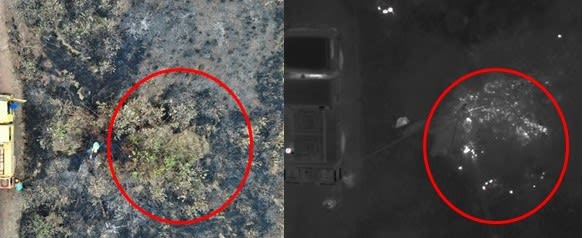
Figure1: showing aerial view of hotspot area with normal camera and thermal camera using infrared radiation.
Benefits of drones during active burns and mop-up
• Situational awareness
• Monitor the pace of the burn
• Check on the crew members
• Monitor edges of the burns for jumps
• Check the perimeter for hotspots
• Determine where the hotspots are during a survey on mop-up operations
Conclusion
Drones offer exceptional advantages in terms of safety, speed, and efficiency. During active control burns and unplanned wildfires, they assist the crew in suppressing the fire much faster and safer by being the eyes on the sky and providing real-time information that can be used during the fire. They help monitor hazardous areas remotely and identify potential risks before sending in ground crews. The continued development and integration of drone technology holds great promise for improving the ability to combat forest fires. Therefore, it is crucial to continually integrate traditional and new methods of fighting fires to protect the forests.
The article content was provided by Saphire Blue Drone, a company based in Nelspruit, South Africa that specializes in SACAA-accredited drone training and operations. Saphire Blue Drone facilitates a UASOC (Unmanned Aircraft Systems Operating Certificate) to allow their clients to fly legally and insured in industries like forestry, mining, and security. Saphire Blue also specializes in manned aviation training with helicopters and fixed-wing aircraft, this background in manned aviation has enhanced their drone training programs and their grasp of aviation regulations, ensuring a high level of safety and expertise.