Background on teleoperations
Skogforsk (The Forestry Research Institute of Sweden) has been working on teleoperated/remote-controlled technology for several years. The work began by developing technology to operate a forwarder remotely. Recent developments have been directed at developing technology for silviculture. Hence, Skogforsk has successfully tested the application of a remote-controlled soil preparation machine.
Why focus on remoted controlled scarification
According to Martin Englund from Skogforsk, who led the project, the reasons for exploring remote-controlled machine possibilities are (i) improving the operator's working conditions. In scarification operations, the operator is continuously exposed to whole-body vibrations. “It's unlike a forwarder, where the machine drives on designated routes and uses a crane to reach areas around the machine. In soil scarification, the operator sitting in the machine's cab is constantly transversing rough terrain.” (ii) Remote-controlled operations are the next logical step towards automation. Before we can move from mechanised operations to possibly autonomous machines in future, remote-controlled operations are an essential link that needs to be explored. (iii) Remote-controlled machines create opportunities for innovative and refined machine designs as manufacturers don’t need to design machines with an operator cab. Given the reasons above, exploring this field is an important foundation for future innovation.
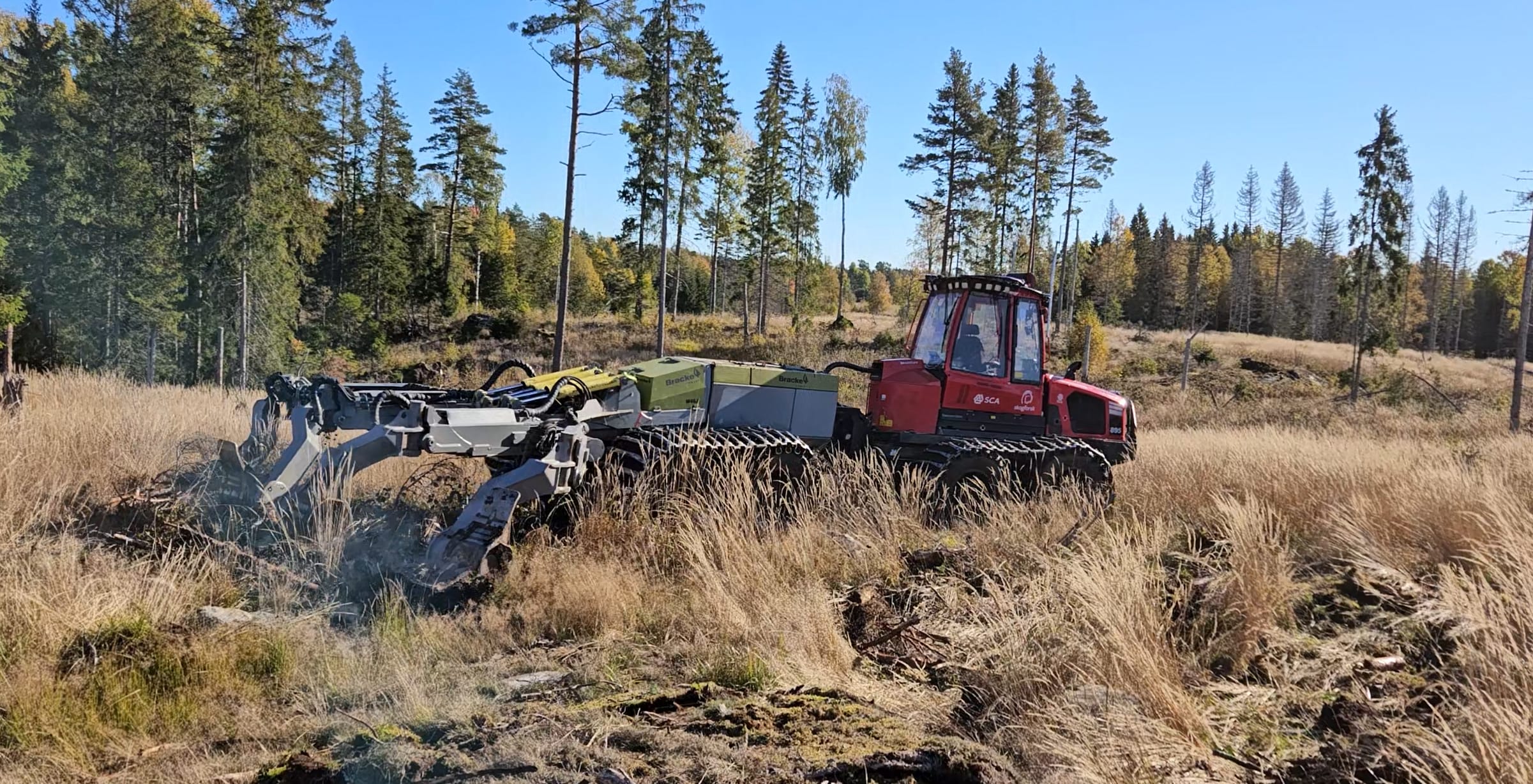
Image Source: (Skogforsk, 2024)
Developing and testing the remote-controlled scarifier
A Komatsu 895 forwarder carrier was mounted with a Bracke four-row mounder. The machine and mounder controls were duplicated at a base station. All the joysticks, keypads and machine control functions were available to the operator at the operator station, which was located approximately 300m away from the machine. The machine had four different camera systems to enable the operator to view the machine's front, sides and back. The camera visuals were transmitted to four screens for the operator to view when operating the machine remotely. Different visual aids, such as graphical lines, were indicated on the displays to help the operators better understand the prevailing conditions more accurately. Martin Englund emphasised that data communication between the machine and the operator station is a key requirement for any teleoperation system. Due to the high volume of data being transmitted, high-speed wireless communication had to be in place. Furthermore, communication between the machine and operator base station was facilitated by Wi-Fi antennas.
Lessons and plans going forward?
The project indicated at a high level that remote-control scarification is possible. Three operators were involved in testing the machine remotely, and their feedback was helpful in future improvements. Some of the main lessons from the project, which are essential for future development work, were
• The complexity of data communication between the machine and the base station
• The lack of real-time work environment feedback for the operators as they used the machine:
• Uneasiness of operators as they did not have a good sense of the ground and machine interaction. The operators did have access to sound feedback from the machine, from which they could hear if the steel tracks were scraping against rocks or not as an indication of ground conditions.
• The tilt and lean of the machine, which operators can experience from the machine cab, was more complex than a duplicate, even though visual feedback could be provided based on a sensor installed on the machine.
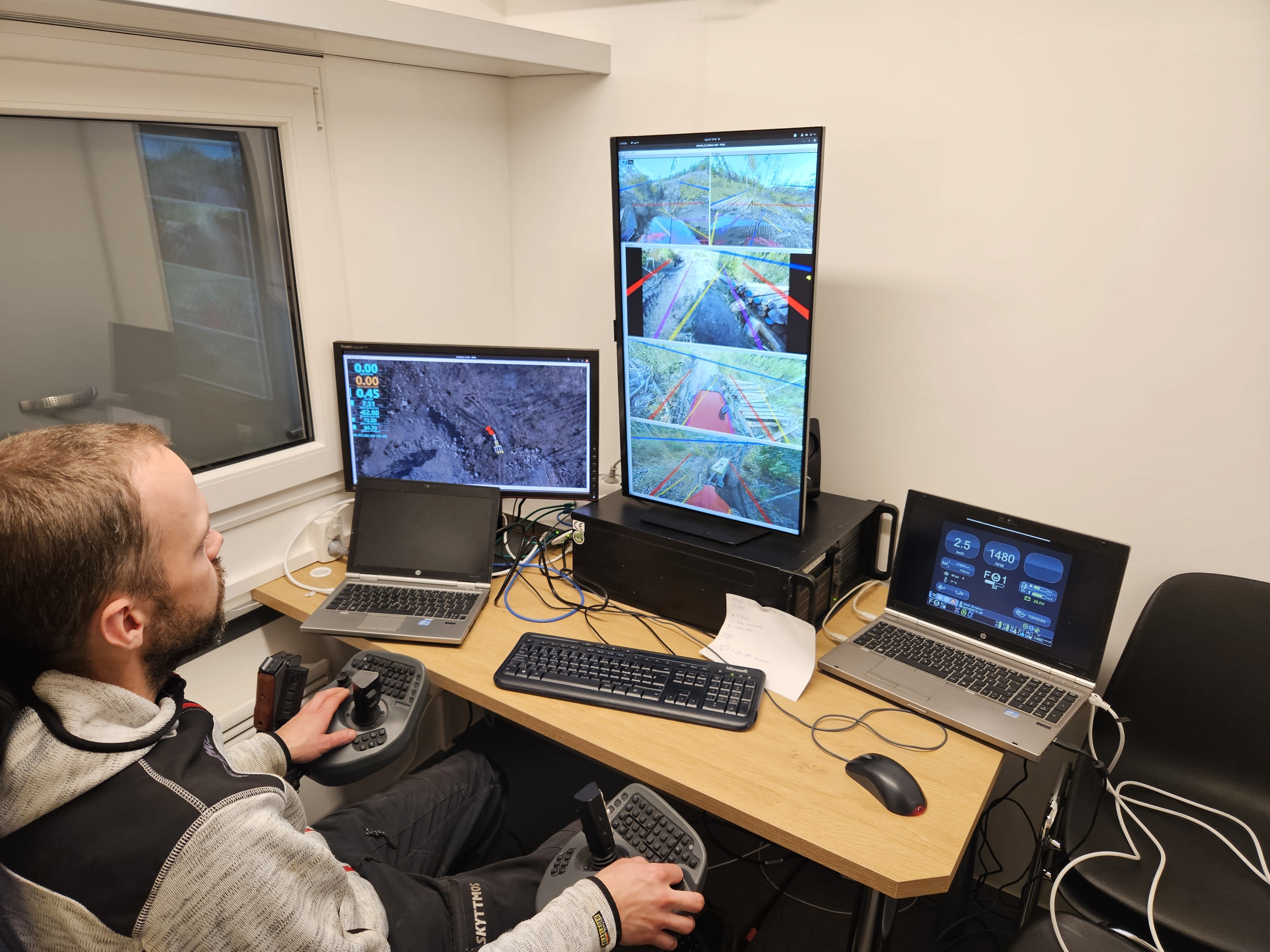
Image Source: (Skogforsk, 2024)
There are plans to continue with teleoperations in other smaller machines and focus on strategic areas for teleoperation, sensations, vibrations, and sound. There are great opportunities offered by this technology, for example, operators may in future be able to operate machines remotely from urban areas, or multiple machines may be operated at the same time, thereby enhancing efficiency.
The research and development project, was funded by the Nils and Dorthi Troëdsson Research Foundation and carried out in collaboration with SCA Skog, Bracke Forest, Sveaskog and Skyttmos Skogsentreprenad AB.