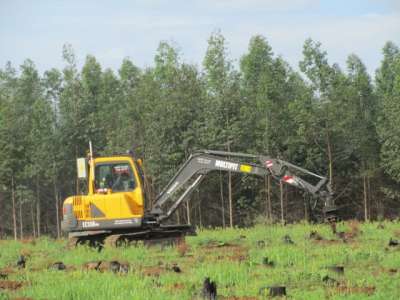


After harvesting, the stumps left behind obstruct timber extraction and make mechanised regeneration difficult; therefore, they need to be lowered or removed to allow better access. In South Africa, stump removal after felling is typically carried out manually using chainsaws or mulchers. Clearing or reducing stumps and harvest residues creates more suitable conditions for site preparation and replanting, which in turn improves the efficiency of silvicultural operations. While stumps generally have minimal impact on manual re-establishment practices, excessively high stumps interfere with semi-mechanised and fully mechanised systems by limiting machine movement and increasing operational and maintenance costs (damage to tyres and undercarriage). Considering this, a stump clipping machine was developed to remove stumps without the necessity of uprooting them after harvesting.
What is it and how does it work?
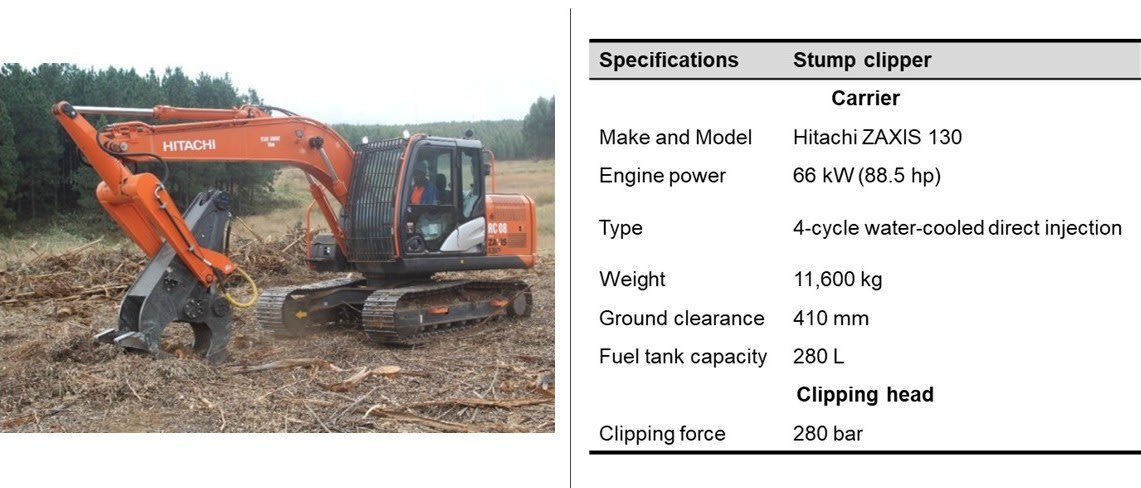
It is a modified, non-purpose-built tracked excavator fitted with a clipping head that enables it to cut stumps close to ground level, thereby improving site access for subsequent silviculture operations as well as firefighting. The stump clipper can clip single, two and three swathes depending on the spacing and boom reach. When clipping a single swathe, the stump clipper can clip between 200 – 250 stumps per hour, depending on the conditions. In a pulp stand harvested using a harvester, the stump clipper can recover chunks ranging from 15-17cm height, with a small portion of the chunk below ground, although this is influenced by species type and planting density. In addition to reducing stump height, the machine can also be used to destump a compartment where the planting positions or spacing is being changed or to clear single lines to create improved access corridors for extraction equipment.
Advantages of stump clipping
• Improves access for subsequent silvicultural operations
• Increases productivity of mechanised silvicultural operations
• Reduces the movement time of manual and mechanised subsequent operations
• Lowers the wear and tear of machines used for extraction and planting
• Enable for chuck collection for biomass usage for other purposes
• Facilitates compartment spacing change
Conclusion
Stump clipping offers a practical alternative to current stump removal or reduction methods. Overall, the stump clipper provides an efficient and versatile solution for improving post-harvest site conditions by reducing stump height, increasing machine accessibility, and supporting both regeneration and extraction activities. Its capacity to operate effectively across different spacing arrangements, while also producing recoverable biomass, makes it a cost-efficient intermediate option to full stump removal and a valuable asset in semi- and fully mechanised forestry systems.