

What is it?
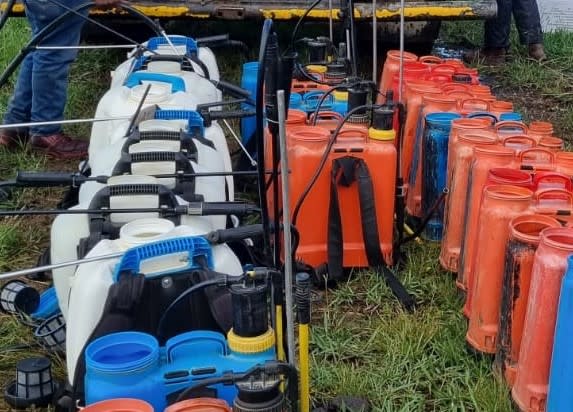
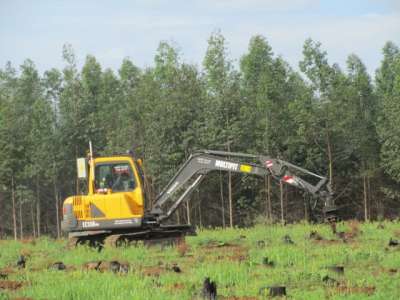
Electric backpack sprayers support precision forestry by enabling targeted application with low drift and consistent rates. Backpack sprayer technology uses a portable tank mounted on padded shoulder straps, a pump (electric motor) to pressurise liquid, and a hose with a wand or boom and interchangeable nozzles to control flow and spray pattern; electric models use rechargeable batteries and centrifugal or diaphragm pumps for consistent pressure. In silviculture, backpack sprayers are used to apply herbicides to control competing vegetation, spot-treat weeds and pest outbreaks, and deliver targeted silvicultural treatments (e.g., cut-stump or basal-bark applications).
How electric backpack sprayers are configured
Electric sprayers use a battery-powered pump, so the operator simply holds the wand and directs the chemical to the target areas. The tank capacity used in forestry applications ranges from 15 to 20 litres. The electric backpack sprayer typically has removable batteries to facilitate easy charging. When using electric backpack sprayers, it is important to monitor battery life and pressure; swap batteries before performance drops below calibrated settings.
Below is a comparison between the conventional manual backpack sprayer and electric backpack sprayers.
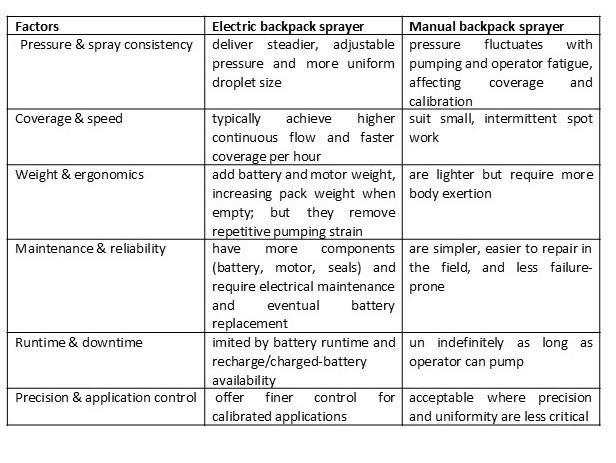
Overall, electric models have a higher upfront cost and replacement battery expense but can lower labor costs and increase throughput. Manual sprayers are cheaper initially and cheaper to maintain. Various manufacturers (e.g., Husqvarna, STIHL) offer electric backpack sprayers. One needs to ensure that a reputable supplier is selected and that adequate spares are available before purchasing.