

Background
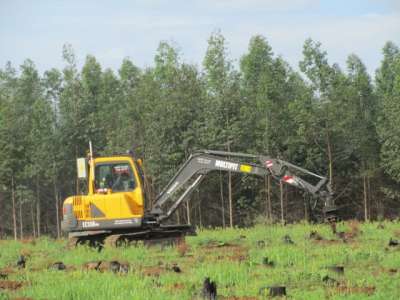
Mechanized processes bring greater yield and optimization of scarce labour. The mechanization of planted forests in Brazil is still far from the level of the harvesting and transportation systems existing in the country, which has a negative impact on its competitiveness in the international market.
Current status
According to surveys carried out by the Cooperative Program on Forest Mechanization and Automation (PCMAF), which is part of the Forestry Research Institute (IPEF), carried out biannually since 2018/19 with companies affiliated to the institute – for some of the largest Brazilian forestry companies - the mechanization rate reaches up to 51.1% of the companies, at level five (mechanical assemblies and implements that require only the operator without the use of autopilot). Most of the companies (30.9%), are still at level two (using tools with mechanical activation). Not surprisingly, none of the largest Brazilian forest companies are adopting higher levels of mechanization, such as levels seven and eight. Level seven is related to mechanical assemblies, which are remotely controlled by an operator in the field (manned). Level eight is related to mechanical assemblies which do not require an operator in the field, as an autonomous tractor (unmanned).
Why mechanize?
Mechanization is a spontaneous need for the forestry sector for several reasons: it has the potential to promote a reduction in forestry operating costs, increases yield and optimizes the labour allocated in the field. In addition, it improves the ergonomics and reduces work effort as well as mundane repetitive activities for the worker. The increase in labour costs,the decrease in labour availability, a higher tax burden than countries like China and the USA and the cost of electricity , are some of the key factors influencing the cost effectives of forest operations in Brazil despite having the highest average yields for Eucalyptus forest plantation. Nonetheless, , it is worth mentioning that today there are already some automatic operations considering the use of drones, for example, for the application of herbicides and leaf-cutting ant control insecticides.
What are the challenges?
According to Guerra, the acquisition cost still prevents a greater degree of mechanization and digitalization in Brazil. In addition to the investment value, which is high, some machines require special training. Tailor made trained people ready for the upfront technologies is a problem today. There is a general shortage of qualified and trained labour for machinery and equipment for forestry operations in forestry. Furthermore, there is currently no specific financing program for these machines, automation or digitalization. So, the challenge of developing/bringing, testing and adopting technologies which will increase competitiveness in the Brazilian forestry industry is dependent on the drive by various key stakeholders!