

Background
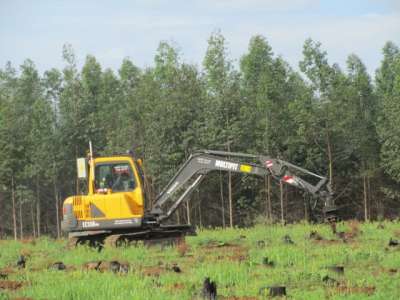
One of the common and effective methods of weeding is to cut and treat. This method involves cutting stems as low as possible and applying chemicals to the cut surface of the stumps to prevent the plant from regrowing. Some weeds tend to resprout and grow vigorously if the stumps are not treated after clearing. Traditionally, the cut and treat weeding method has been practiced using manually intensive methods (e.g., using a saw or axe to cut the stem and then applying chemicals), which are ergonomically unfriendly and pose safety risks. In conjunction with industry partners, Husqvarna has introduced a motor manual tool to perform the cut-and-treat operation effectively and efficiently.
What is it?
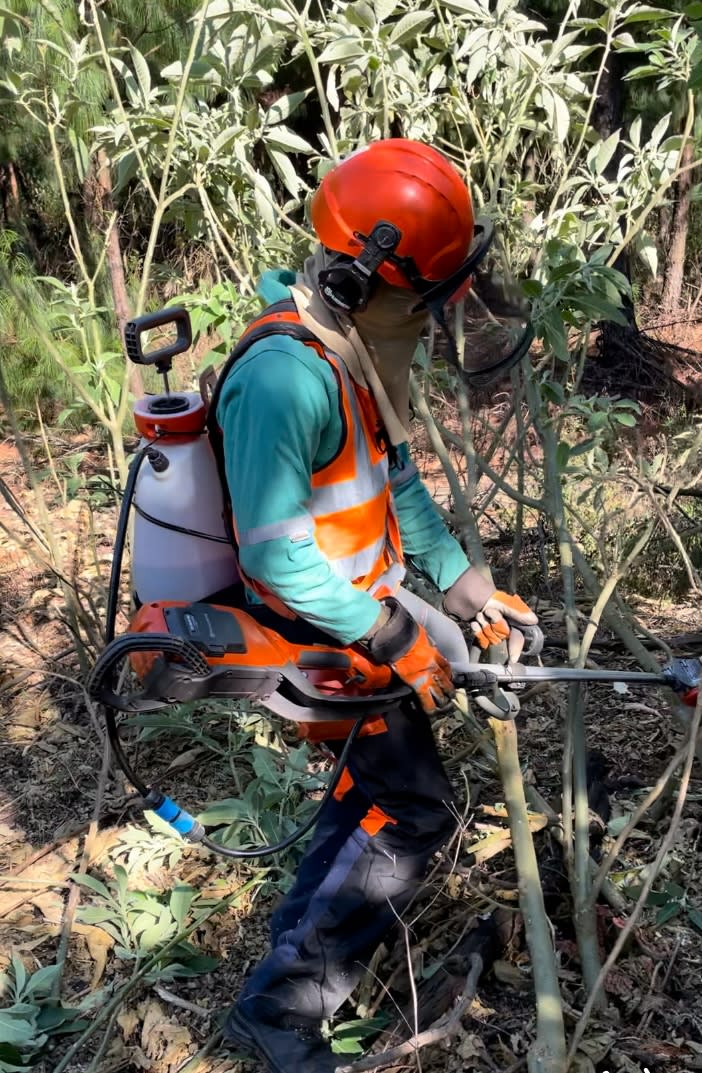
Husqvarna’s cut and treat solution comprises a battery (530iPX) forestry clearing saw with a chemical spraying nozzle attached. The nozzle is used for chemical application immediately after cutting. The operator carries an 8-litre spray container with chemical, which is supplied to the head after cutting. The container is carried using a standard-fitting harness for improved ergonomics and mobility. The battery-powered clearing saw is lightweight, has low vibrations, and has low noise levels compared to the petrol models.
How it works?
A trained and geared operator uses the clearing saw to cut an unwanted stem and immediately applies the required chemical to the cut surface. The chemical mix applied can be mixed with dye to easily mark the trees that have been treated already. The clearing saw can cut diameters of up to 100mm thick. Furthermore, under normal conditions, a single battery can last up to 90 minutes, giving one numerous cuts, plus the batteries are interchangeable, which facilitates recharging in the field and/or the use in other Husqvarna Battery products—one battery fits all.
Conclusion
This solution is well suited to improving the efficiency and working conditions of conventional cut-and-treat operations, helping one not to miss out on treating cut stumps. Even though the tool can improve work performance, it is important that all regulatory specifications associated with using chemicals and the application specifications are adhered to.
For more information, visit: Husqvarna