

What happened?
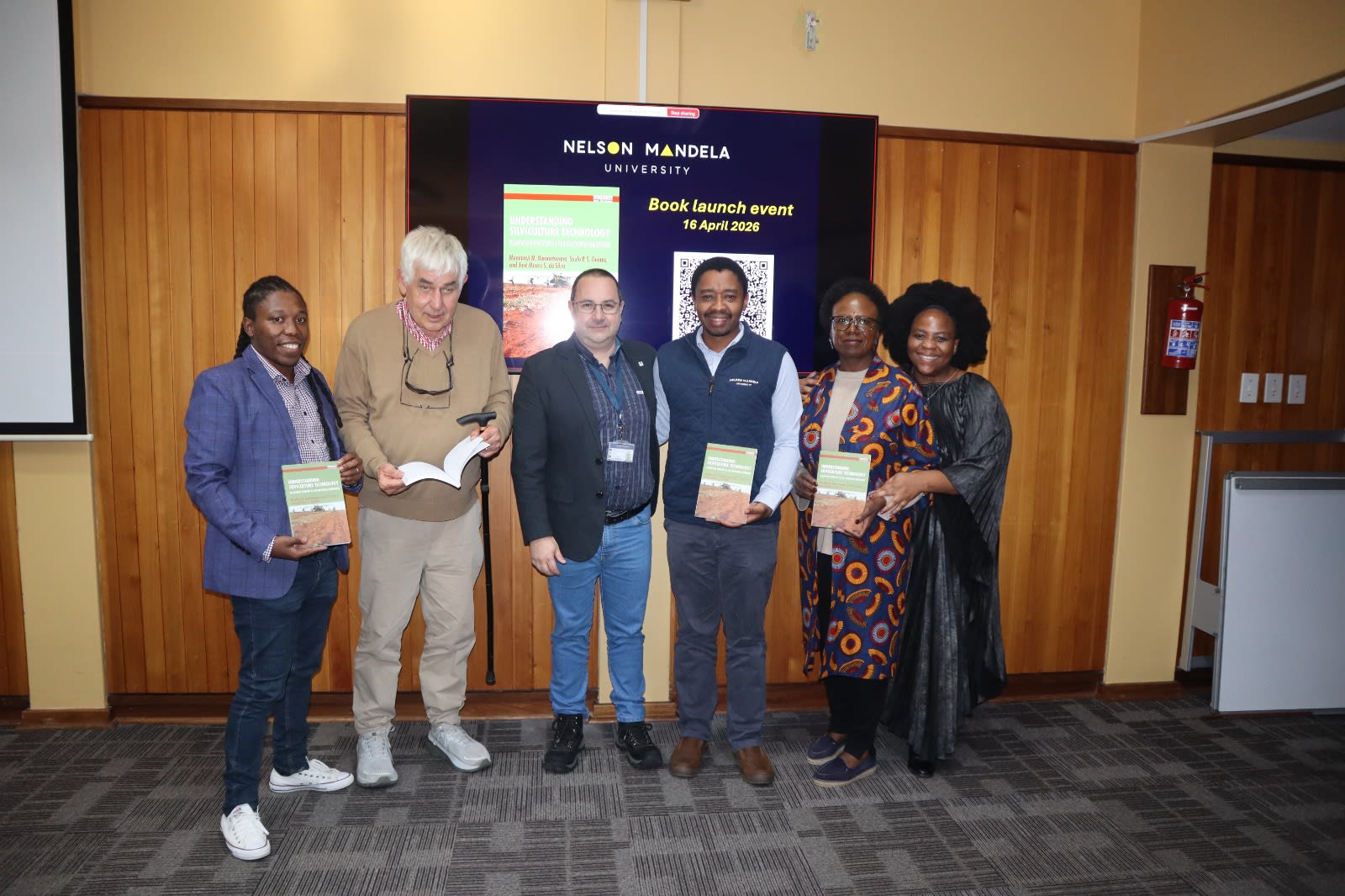
Nelson Mandela University hosted the launch of Understanding Silviculture Technology: Plantation Forestry in the Southern Hemisphere, a new textbook authored by Dr Muedanyi Ramantswana, Prof Saulo Guerra and Prof Jose Mauro da Silva. The event drew forestry growers, higher-education representatives, and other sector stakeholders to celebrate a book that addresses the growing role of technology in silviculture.
What is the book about?
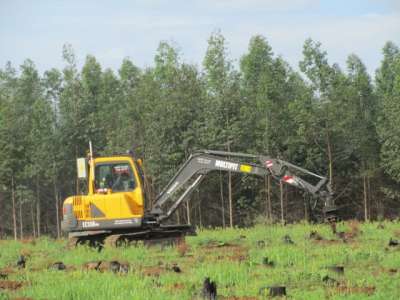
This book describes the various technologies used in silviculture with a special focus on newer technologies that have been adopted over the past two decades in plantation forestry practised in the Southern Hemisphere. Historically, innovations in silviculture technology have been slow to develop; however, over the past two decades, new technologies have been invented and adopted to deal with labour, efficiency, and quality challenges. This book presents a comprehensive introduction to modern silviculture technology, as well as explains the environment and operations within which these technologies are used. In the context of this book, the focus is on industrial plantation forests grown in a range of Southern Hemisphere countries, mainly South Africa and Brazil, with a specific focus on the technologies used in establishing and tending eucalypts, pine, and wattle species. This book examines modern technologies used to produce trees from a nursery, including managing residues on the site, preparing the soil, fertilising, and irrigating the plants. It then examines the technologies available for after planting, including those that can assist in eliminating weeds, pruning, thinning, and fire protection systems. This book also discusses digital technologies available to manage silvicultural operations. By the end of this book, readers will have a strong understanding of the range of technologies available, the impact of those technologies, and their capabilities and limitations. This book will be of great use to students of silviculture and forestry, as well as professionals working in the forestry industry.
Book launch event
At the event, Dr Ramantswana stated that the book was developed to address a knowledge gap in silvicultural technologies. Drawing on country-specific surveys in South Africa and Brazil, the authors aimed to produce a teaching and forest-practitioners' resource focusing on how technologies are applied across nurseries, regeneration, and stand tending. Furthermore, the textbook compares forest practices in South Africa and Brazil and presents practical descriptions of current and potential future technologies, along with a discussion of challenges and opportunities across the integrated forest value chain. Prof Saulo indicated that, through his collaboration with Dr Ramantswana since 2018, their research has focused on this specific field of technology and innovation in silviculture, resulting in this book. He expressed his gratitude for the opportunity to build a relationship with the Nelson Mandela University Forestry Department and for producing an educational tool that will be used by students and various resource managers. Compiled through active collaboration among Nelson Mandela University, UNESP, and IPEF, this publication is presented as one of the first textbooks to focus specifically on silvicultural technology for the Southern Hemisphere. The authors hope it will serve as a valuable learning resource for students, academics and industry practitioners, supported by clear figures and practical examples. Speakers at the launch highlighted the book’s academic and industry value. Mr Mlungi Thusi (George Campus branch librarian) encouraged continued academic publishing and underscored the library’s role in preserving knowledge for future generations. Mr Tiaan Pool, Head of the Forestry Department, praised the achievement and noted the book’s importance as a teaching tool. Dr Ronald Heath (FSA Director: Research and Protection) represented the forestry industry and emphasised the need for local and international collaboration and knowledge-sharing through written works. The authors and organisers thanked all contributors and attendees for supporting the project and expressed hope that the textbook will strengthen silviculture technology education and practice both locally and globally.
Hard copies of the book can be ordered from the authors or via this link www.routledge.com Understanding-Silviculture-Technology-Plantation-Forestry