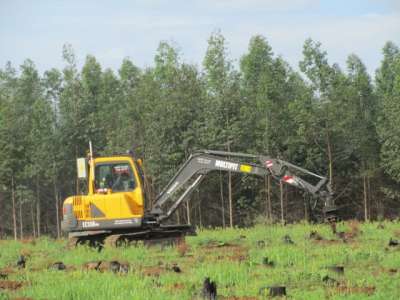


Extreme and dynamic climatic conditions are affecting the forestry industry. As a result of wildfires in forestry, firefighters are forced to operate in highly dangerous and unpredictable environments. High temperatures, unstable terrain, and limited visibility create significant risks for wildfire response personnel. To improve firefighter safety while maintaining operational effectiveness, emergency services worldwide can consider robotic technologies capable of entering hazardous environments before human crews. One of the most advanced developments in this field is the use of quadruped “robot dogs” designed for inspection, reconnaissance, and emergency rescue support.
Unlike traditional wheeled robots, quadruped robots can move through complex terrain by walking, climbing stairs, crossing rubble, and navigating confined spaces. Their mobility allows them to operate in environments that would normally be inaccessible or unsafe for conventional robotic systems. Chinese robotics company Deep Robotics has dedicated research and development to quadruped robotic systems. Industrial robot dogs are specially designed for harsh operating environments, including emergency rescue and firefighting support.
What is it?
Deep Robotics recently introduced a dedicated emergency firefighting solution designed to improve situational awareness and reduce firefighter exposure in extreme environments. The system integrates robotic mobility, AI-assisted navigation, and remote operational capability to support emergency rescue teams during dangerous incidents. Deep Robotics has developed several advanced quadruped robotic platforms, including the X20, X30 and the new wheeled-leg LYNX series. These robotic systems combine artificial intelligence, autonomous navigation, thermal sensing and rugged all-terrain mobility into compact unmanned platforms.
• Hazard detection in smoke-filled environments
• Thermal inspection and hotspot identification
• Search and rescue reconnaissance
• Remote monitoring of dangerous fire zones
• Equipment transport in difficult terrain
• Emergency firefighting support
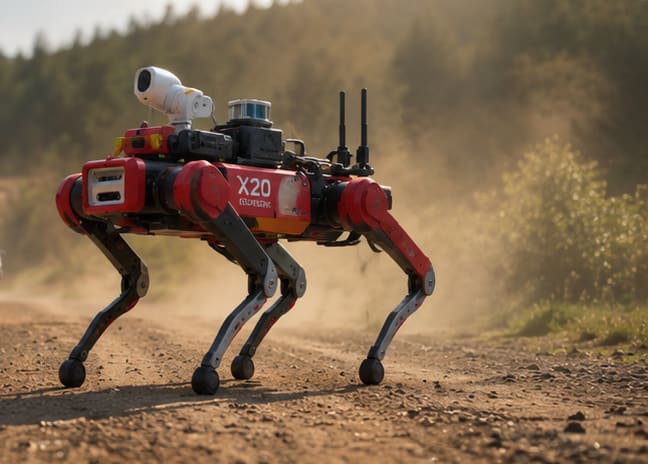
image: Deep Robotics X20
How does it work?
The Deep Robotics platforms use advanced quadruped locomotion systems that allow them to move dynamically across uneven terrain while maintaining stability and balance.
Quadruped Mobility System
Unlike wheeled robots, robot dogs use articulated legs that adapt independently to terrain conditions. This allows the systems to:
o Climb stairs
o Cross debris and rubble
o Operate on steep slopes
o Navigate mud, gravel, snow, and water
o Maintain stability on unstable ground
Thermal imaging and hazard detection
Integrated cameras, LiDAR sensors, and thermal imaging systems provide operations. Firefighters can remotely assess:
o Heat signatures
o Smoke density
o Structural conditions
o Potential survivor locations
This improves decision-making while reducing direct exposure of emergency crews.
Remote and Autonomous operation
The robot dogs can operate through remote control or semi-autonomous navigation systems. AI-assisted obstacle avoidance enables robots to navigate dynamic environments while avoiding collisions and maintaining route stability.
Emergency firefighting support
Deep robotics latest emergency response systems are designed to work alongside human firefighters rather than replace them. The robots provide reconnaissance, environmental intelligence, and access into high-risk areas before personnel enter the scene.
Other interesting information
Several features make Deep Robotics quadruped systems particularly suited to firefighting and rescue operations:
>Extreme environment capability
The X30 robot dog was developed for operation in severe environmental conditions and can function in temperatures ranging from approximately -20 °C to 55 °C. The platform is also waterproof and designed for rugged industrial environments.
>AI-assisted navigation
Advanced AI systems allow the robots to autonomously detect obstacles, maintain balance, and navigate complex environments with minimal operator intervention. This is especially valuable during low-visibility or smoke-filled firefighting operations.
>Growing fire service adoption
Emergency services internationally are increasingly integrating robotics into emergency response operations. Fire departments are using robotic systems during disasters where firefighter safety is a major concern.
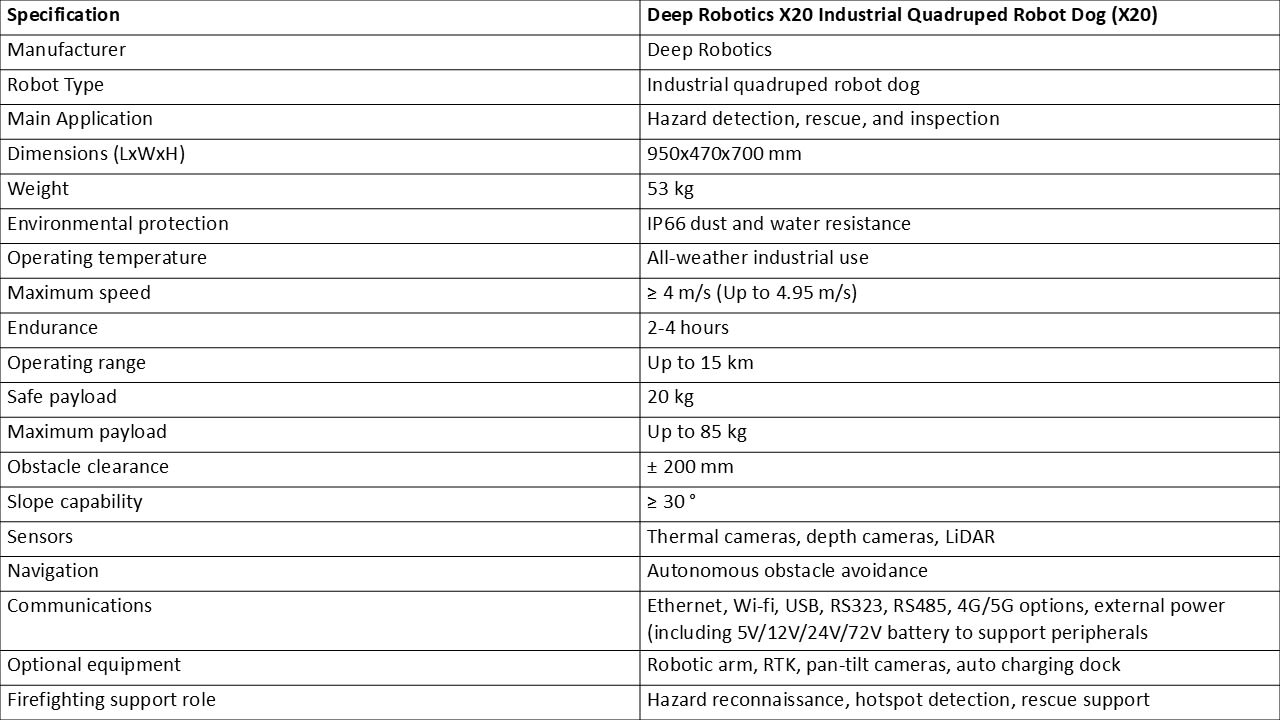
Specifications of Deep Robotics Firefighting and Rescue Platforms
For more information, visit: DEEP Robotics