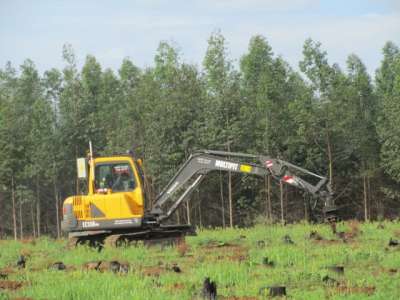


The conference objectives and organisation
Held on October 21-22, 2026, at FCA/UNESP, in Botucatu, São Paulo, Brazil, the latest edition of the event brought together 180 leading experts, researchers, students, rural producers, and forestry professionals connected to the IPEF's cooperative programs, including the Cooperative Program on Forest Mechanisation and Automation (PCMAF), the Cooperative Program on Forest Protection (PROTEF), and the Cooperative Program on Silviculture and Forest Management (PTSM). The event was organised by a multidisciplinary team from IPEF, composed of representatives from its cooperative programs and institutional support areas, including Alexandre de Vicente Ferraz (PTSM), Angelo Bredariol Neto (PCMAF), Beatriz Zerbinato Balista (PCMAF), Gabriela Sacilotto de Souza (PTSM), Helena Theodoro (Communication/IPEF), Mariana Maciente da Silva (Events/IPEF), and Murilo Fonseca Ribeiro (PROTEF). The meeting served as an important forum to discuss current challenges, share practical experiences, and advance technical knowledge in forestry operations and management. Over two days, participants explored the latest developments in technological innovation and operational quality, with a special focus on increasing the efficiency and application quality of drone-based forestry operations. Discussions also highlighted emerging technologies, field-validation experiences, and pathways for improving operational performance across different forest production systems.

The event's central theme was plantation health management, with presentations covering advanced approaches to monitoring and controlling pests, diseases, and weeds. Experts shared strategies to improve decision-making and promote healthier, more productive forest plantations. The Conference also emphasised forest measurement, new monitoring methods, and tools to evaluate the recovery of degraded areas. These discussions reinforced the importance of reliable data and modern technologies in supporting sustainable forest management. In addition, the event promoted important debates on governance, regulation, economic viability, and workforce development, highlighting the need for continuous technical training and robust operational standards to meet the evolving demands of the forestry sector. The event successfully fostered collaboration among academia, industry, and field practitioners, strengthening technical networks and contributing to the continuous improvement of forestry operations through knowledge exchange, innovation, and the dissemination of best practices.
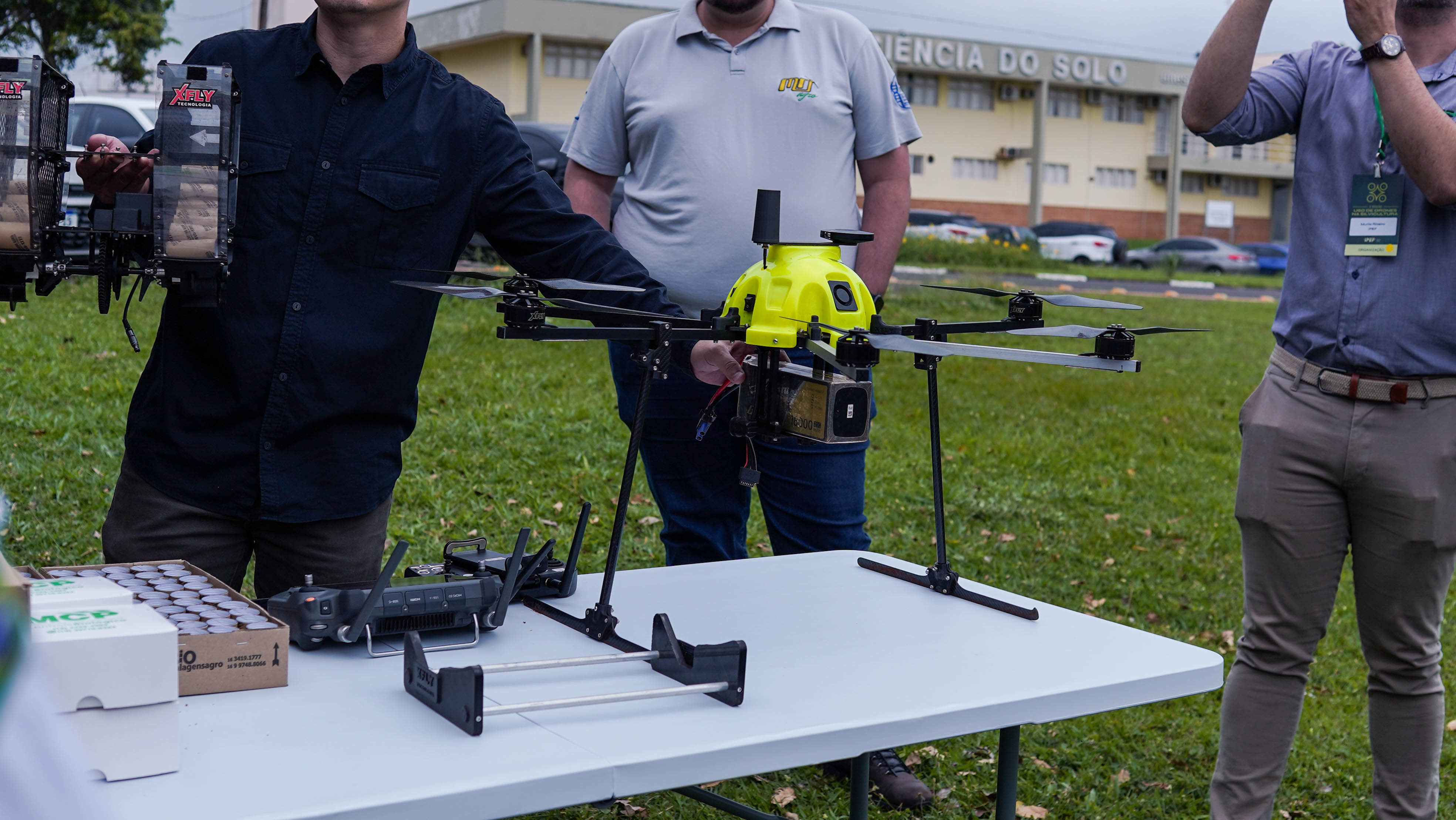
The Great Surge: Purchasing Operational Capacity, Not Just Hardware
Brazil’s forestry and agricultural sectors are experiencing an unprecedented surge in unmanned aerial vehicle (UAV) adoption. Foreign trade data adapted from SISCOMEX (2026) shows that total imports of agricultural drones surpassed 60,000 units in 2026. This reflects an exponential growth trajectory—expanding from 3,008 units in 2021 to 4,435 (2022), 9,580 (2023), 21,011 (2024), 52,456 (2025), and reaching 60,607 units in 2026. Long-term market projections indicate that Brazilian imports will reach 115,586 units by 2030. Along with market volume, platform capabilities have transformed rapidly. In 2020, standard operational setups carried a 4-meter boom width and a 10-litre payload capacity. By 2023, platforms expanded to 8–10 meters and 30–40 litres, and by 2025 they reached 12–22 meters and payloads of up to 300 litres, according to Cornago (2026). As payload capacity and swath width increased, the forestry market underwent a fundamental mindset shift: companies stopped merely purchasing drone hardware and began buying operational capacity.

Image: IPEF Organising Committee