

What is it?
The motorised Husqvarna 321S25 knapsack sprayer runs on a two-stroke engine. It features main parts, including a transparent water tank, ventilated back padding on the harness, and broad shoulder straps for maximum support. The harness material is waterproof. It has improved ergonomics and power, which make it an efficient tool to work with
What is it used for?
It is a powerful backpack with a large mixture tank (25 litres), making it well-suited to pre-plant and broadcast selective herbicide spraying work in forestry. It delivers a consistent spray pressure compared to a manual knapsack, where operator fatigue due to manual pumping reduces efficacy and productivity. Droplet size can be adjusted by varying the pressure of the sprayer: a higher pressure reduces droplet size, while a lower pressure increases it.
Early Findings
The motorised knapsack was tested, and the early test results generated a productivity of 0.35 Man-days/ha (5.7 ha/shift) with two operators. The main time-consuming elements in the operation were spraying and refilling, which took 48% and 52% of the spraying observation time, respectively. The weed control effectiveness was determined to be greater than 95%.
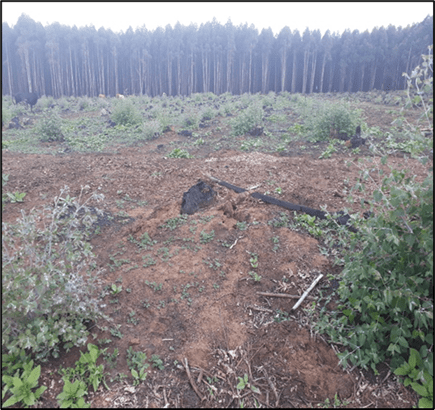
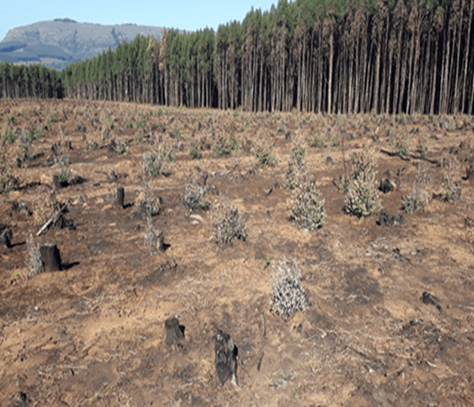
Test site: before and after the pre-plant spray with the motorised knapsack
1. Although the tank is a 25-litre tank, the trial only allowed the filling of the knapsack to the 10-litre mark to accommodate a maximum load of approximately 20 kg (the Tank's gross mass, empty, is 10 kg, and the herbicide mix weighs 10 kg).
2. Considering the allowable load carried by a worker, it is advisable to purchase the 321S15 model, which has a tank capacity of 15 litres spray tank and a gross mass (empty) of 9,2 kg. However, it still needs to be filled up to the 10-litre mark.
3. The machine is used by two operators. One operator moves logistics (combi can, pre-mix), the other spraying and then swapping over when fuel needs refilling.
4. The centre nozzle needs to be extended forward away from the operator’s legs since the spray goes to the legs. Alternatively, a deflector can be installed. This will remove the need to spray with rain suit pants, as these become uncomfortable on a hot day.
5. Since the swath width is 6 meters, it is important that the operator always start by positioning himself on the second line from the compartment edge. When he reaches the end of the compartment, he must position himself on the 4th line, implying that he will always move on even-numbered lines. This will avoid misses.
6. When spraying, the operator must make sure that the endpoints of the swath width allow for at least 30cm overlap to achieve an effective full cover spray, which will avoid misses.
7. The 10-litre herbicide mix runs out after covering a straight distance of 125m. It is more effective for the logistics operator to move ahead and place chemicals and pre-mix at every estimated distance of 125m. This prevents the logistics operator from following behind the spraying operator and avoids the risk of drift coming to him.
Additional Technical Detail
• The prototype motorised knapsack came with a modified 3m aluminium boom with one AN5 centre nozzle and two OC8s side nozzles, giving a six to eight-meter swath
• The boom is connected via a high-pressure pipe to a pressure pump situated at the bottom of the knapsack tank.
• Spraying commences when the accelerator is at a high, and a high-pressure jet of water is released from the nozzles connected to the boom.
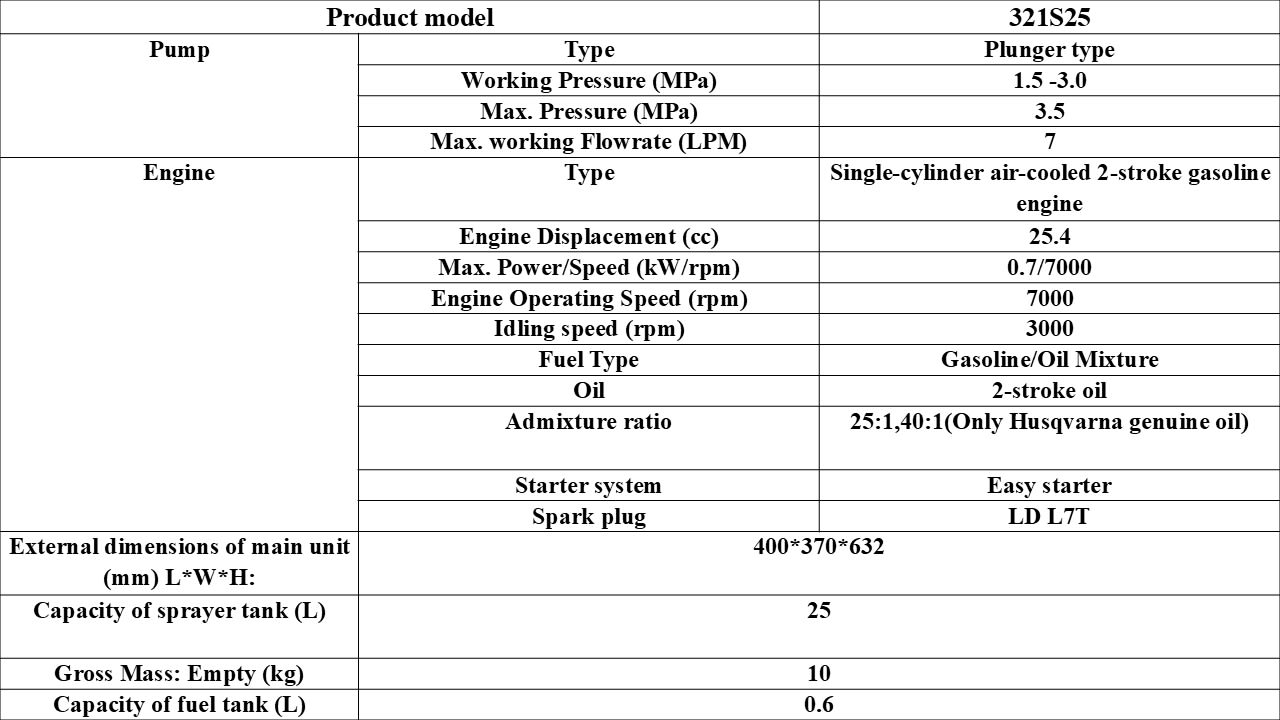
Technical specifications
Article information provided by Silvix Forestry Silvix