Optimising the full forestry value chain
Health and safety are a critical pillar in optimising the forestry value chain. The purpose of health and safety is to prevent injury/illness, protect workers, reduce environmental harm, ensure legal compliance and operational continuity. The use of AI can complement existing safety initiatives and further improve workplace safety. The forestry industry creates numerous employment opportunities, but these come with significant risks and safety hazards.
Several hazards are prominent in silvicultural operations:
• Slips, trips and falls when walking and performing silvicultural activities
• Chemicals, pesticides and fertilisers used in silviculture operations can be harmful
• Fatigue due to performing labour-intensive work
• Extreme climatic conditions e.g. thunder, lightning, heat
• Chainsaw accidents: Improper use of chainsaws can lead to serious accidents, whether from using the wrong tool for a tree’s thickness, poor maintenance, or mechanical faults. Distraction or fatigue further increases the risk of careless operation, causing injuries to the logger or others nearby
• Uneven terrain: uneven ground conditions, with hidden holes, roots, and debris, put workers at risk of slipping, tripping, and falling. These hazards increase the likelihood of injury while moving through afforested areas
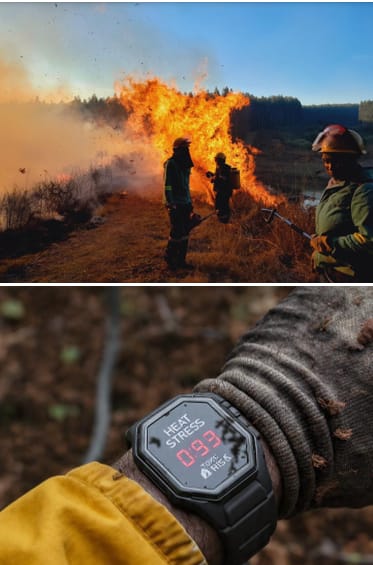
• Fire management: Operations in fire management carry risks such as heat exposure, inhalation of toxic fumes (like carbon monoxide), eye irritation from particulates, and burns. Risk levels can be heightened by poor visibility, challenging terrain, logistical difficulties, night operations, sudden wind changes, and human factors such as stress and fatigue.
• Sharp tools: Direct contact with sharp tools, such as brushcutters, is described as a primary cause of serious injury. Operators are at risk of being injured by the machine because of a kickout/blade thrust (blade jerks violently after striking something solid).
• People working alongside machines face dangers comparable to those operating them. In operations such as pruning and thinning, workers near active machinery are exposed to risks including chainsaw kickback, flying debris, and the possibility of being run over.
EHS is expected to evolve from isolated point solutions into integrated agentic safety platforms. Through multimodal AI that combines video, audio, text, and sensor data, organisations will be able to create live risk pictures at site level. For example, a safety helmet embedded with a helmet camera can monitor the working environment in real time, measure risks, and alert an individual to potential dangers - such as using an incorrect felling technique or direction during thinning operations that could cause injuries. Safety personnel can also ask questions such as what PPE is required, or which blade is best suited for a particular brushcutter, to reduce the risk of kickout or prepare a risk summary which can then be shared with workers on site.
AI also has the potential to protect the health of workers – for example through smart wearables that monitor safety conditions such as heat stress and/or exposure to toxic fumes during fire activities. Furthermore, repeated injuries often occur because previous near misses and incidents are never referenced - ‘no one ever goes back to paper-based reports in archives.’ Agentic AI can help safety teams manage and interpret large volumes of operational data. By synthesising incident reports, near misses, observations, and compliance records, it surfaces patterns, identifies emerging risks, and prioritises corrective actions.
Vision and collaboration
Benchmark Gensuite has a vision to implement agentic-based AI for predictive insights and automated alerts in the workplace. It is a provider of digital solutions for Environment, Health and Safety (EHS), Sustainability, Disclosure Management, and allied enterprise risk solutions. Benchmark Gensuite has worked in collaboration with HEICO companies to advance its safety vision through potentially serious incidents (PSI) AI Advisor with the aim of uncovering hidden risks and obtaining real-time insights that would allow it to take prompt actions.
How does Agentic AI work?
Agentic AI works by monitoring signals across systems, opening and prioritising cases, notifying supervisors, assigning tasks with deadlines, and following up until completion, escalating only when necessary, all while remaining auditable. Agentic AI operates like a digital coworker: it continuously monitors information, adapts to context, and supports workflows by surfacing insights, identifying risks, and preparing decisions. Instead of waiting for commands, it proactively brings forward the right information, ensuring humans remain in control while maintaining intent and continuity. Agentic AI helps safety teams manage large volumes of operational data by synthesising incident reports, near misses, observations, and compliance records. It surfaces patterns, highlights emerging risks, and prioritises corrective actions. In multi-site environments, it consolidates information across locations, giving leaders clear visibility and enabling them to focus on where intervention is most needed.
Benchmark Gensuite has further shown two areas in which agentic AI is having a notable impact: Agentic AI is making a strong impact in permit management and chemical safety by handling complex, high-volume technical information with minimal margin for error. In permit management, Benchmark Gensuite’s Permit Agent ingests lengthy legal documents, extracts key compliance requirements, and translates them into actionable monitoring and reporting tasks. It helps populate compliance calendars, flag gaps, and recommend task plans, all while keeping human review and approval in place. Chem Agent automatically pulls the latest safety data sheets from chemical manufacturers, checks for updates or changes, and summarises key hazard information. Safety teams can then ask practical questions (like required PPE) or generate a risk summary document to share with site staff.
Future and prospects of AI in health and safety
The future of plantation silviculture is moving toward precision forestry, where AI, remote sensing, robotics, and big data analytics work together to provide real-time management recommendations to improve health and safety in forest operations. Areas where AI can be integrated to improve health and safety include:
• AI supports technical training
• Emergency detection and evacuation communication
• Comprehensive risk assessments and warnings
• Scenario-based decision support systems
• Proactive safety management using historical data
Sources used to compile this article
1. EMCARE. Health and Safety Course: Health and Safety in South African Forestry Industry. Available at: https://emcare.org/health-and-safety-course-health-and-safety-in-south-african-forestry-industry/ [Accessed 17 July 2026].
2. FAO. Occupational Health and Safety in Forestry: Basic Knowledge. FAO Sustainable Forest Management Toolbox. Available at: https://fao.org/sustainable-forest-management/toolbox/modules/occupational-health-and-safety-in-forestry/basic-knowledge/en/?type=111 (fao.org in Bing) [Accessed 16 July 2026]
3. Forestry South Africa. Sappi Marks Major Safety Progress in Forestry. Forestry.co.za. Available at: https://forestry.co.za/sappi-marks-major-safety-progress-in-forestry/ [Accessed 28 July 2026].
4. Meira Castro, A.C., Mota, J., & Baptista, J.S. Occupational Hazards, Risks and Preventive Measures in Forestry Logging: A Scoping Review of Published Evidence (2015–2025). Safety, 12(1), 13. MDPI. Available at: https://www.mdpi.com/2313-576X/12/1/13 [Accessed 17 July 2026]
5. Stihl. Brushcutter Safety Manual. JMJ Sales. Available at: https://www.jmjsales.co.za/docs/stihl/Brushcutter%20Safety%20Manual.pdf [Accessed 28 July 2026]