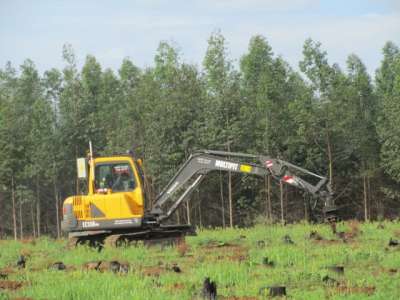


Silviculture forms the foundation of sustainable plantation forestry, encompassing operations from site preparation and stand establishment through to weed control, stand tending, and harvesting. Despite continuous advancement in mechanised harvesting technologies, silvicultural operations in many plantation forestry systems remain labour-intensive and rely heavily on manual practices. Many mechanised silvicultural operations still depend on non-purpose-built equipment, such as agricultural tractors with forestry implements. Although this equipment is cost-effective, it has limited terrain accessibility and robustness in forestry environments. Through mechanisation, existing purpose-built machinery (e.g. from harvesting or construction) has been repurposed, offering an opportunity to accelerate mechanisation while reducing the need to design new machines. Machines such as tracked excavators (Novelquip’s PP1 planting machine undergoes testing | Forsilvitech), forwarders (Novelquip Forestry’s Planting Technology Introduced Globally with Ponsse Buffalo Planter Launch | Forsilvitech), dozers (Semi-mechanised planting with the dozer planting system | Forsilvitech) and skidders (Improve silviculture efficiencies with the Tigercat 630H utility carrier | Forsilvitech) have been purpose-built for demanding operational environments and now modified to perform silvicultural operations with improved efficiency.
Reasons behind repurposing harvesting extraction equipment for forestry silviculture operations
Purpose-built extraction equipment, such as forwarders and skidders, is designed to handle demanding timber extraction operations in challenging forest conditions. These machines are characterised by robust construction, high tractive effort, substantial load-carrying capacity and advanced hydraulic systems, enabling them to drag, lift, carry and transport heavy timber efficiently across difficult terrain. While these capabilities are essential during harvesting, the operational demands of silvicultural activities are generally less intensive, often involving the transport and handling of resources such as seedlings, water, and fertilisers. Consequently, the strength, durability and mobility of extraction machines make them suitable machines for repurposing to support mechanised silvicultural operations. By replacing timber-handling components with specialised attachments, including seedling storage systems, irrigation tanks, planting mechanisms or fertiliser applicators, these machines can be adapted to perform multiple establishment tasks. PlantMax, the Ponsse Buffalo Planter and the John Deere mechanised seedling planter are examples of harvesting forwarders that have been repurposed for mechanised silvicultural operations. Skidders have also been repurposed for silvicultural operations (see image below). Repurposing purpose-built extraction equipment not only extends the productive service life of machinery beyond its primary harvesting function but also improves machine utilisation, reduces capital investment in dedicated silvicultural equipment and promotes a more cost-effective and sustainable approach to plantation management. However, since the machine’s life is being extended, organisations need to cater for increased repair and maintenance costs.
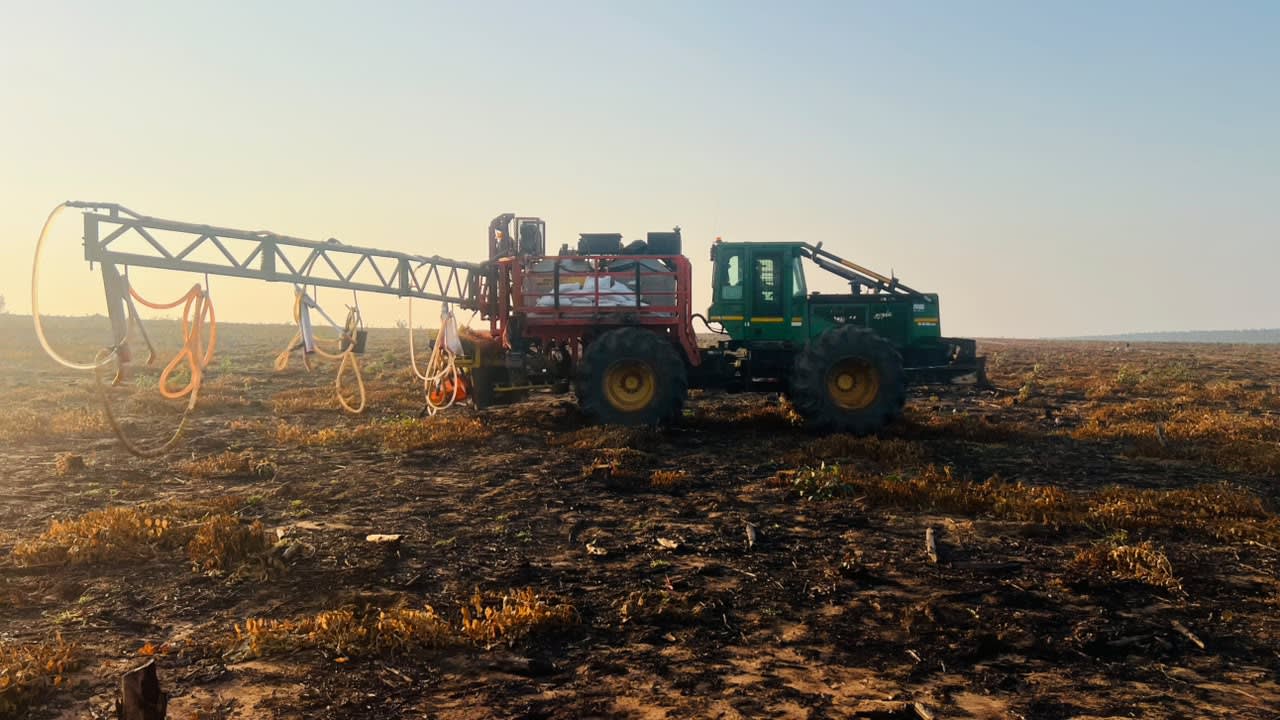
Image by: Mduduzi Khoza
Benefits
• Reduced capital investment through reuse of existing equipment
• Increased operational productivity
• Improved terrain accessibility
• Better ground clearance
• Eliminate additional activities to prepare sites for non-purpose-built machines e.g. mulching or stump cutting
• Lower labour requirements
Conclusion
The adaptation of purpose-built machinery from forest harvesting and civil engineering presents an innovative approach to advancing mechanised silviculture. Rather than developing entirely new machines, existing robust platforms such as tracked excavators, skidders, forwarders and bulldozers can be transformed into multifunctional silvicultural systems by integrating specialised planting, fertilising and irrigation attachments. Such adaptations have the potential to increase operational productivity, reduce labour dependence and lower establishment costs while making better use of existing machinery fleets. Although several engineering and operational challenges remain, advances in hydraulic systems, precision guidance technologies and interchangeable attachment designs provide a strong foundation for future development.